
Build a product
Combine materials, items and processes into a priced, reusable product.
What this is for
A product is a finished, priceable recipe — the material it is made from, the parts it needs, the processes to make it, sizing rules and your margin. Once built, anyone in the shop can quote it in seconds and get the same price every time.
Before you start
- Add the materials, items and processes the product uses first.
- Set your default margin (Settings → Pricing & margin).
Step by step
- 1
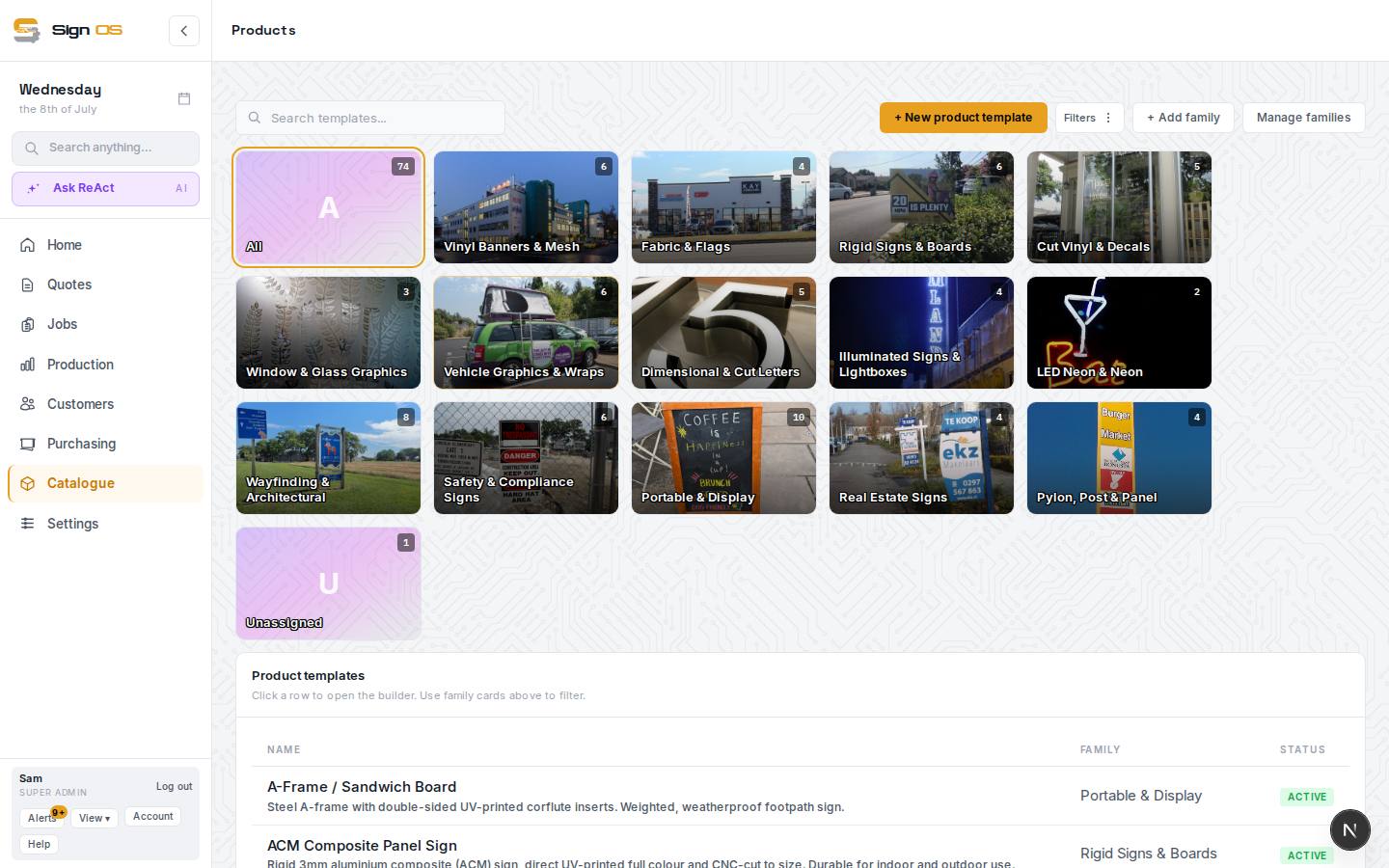
Open Catalogue → Products and press + New product template.
- 2
Give it a template name and pick its product family, then create it. The builder opens on one page — there are no steps to work through in order.
- 3
Fill in Product Info: the name, an optional SKU, the family, and a staff description saying what the product is and which options matter. Add a Product image while you are there.
Note: The picture is worth the minute it takes. It follows the sign onto the quote, the catalogue list, the job sheet and the customer's PDF — and if the product has colour or finish options, each one can carry its own photograph.
- 4
Build the Recipe. Use + Material, + Machine time, + Labour, + Item, + Fixed fee and + Offer a choice to say what goes into the product. The pricing maths writes itself and the preview updates as you edit.
Note: Once the product has a choice, every ingredient gets a When this runs box: always, only when one choice is picked, or one copy for each choice with that choice filling the slot. That is how one product covers Black, White and Anodised without three products — see Make a choice change the price.
- 5
Set the price preview on the right — Price this at, with a width, length and quantity, plus any option chips the product carries. It shows what the product would quote at and what it costs you.
Note: Read the 'Would quote at' and 'costs you' figures together. A sell price that looks right with a cost of $0 means an ingredient is not resolving — usually a material with no supplier price, or the wrong unit.
- 6
Check anything Sign OS flags. The 'Things worth checking' panel under the preview calls out options that change nothing, steps that price at zero, and other quiet mistakes.
- 7
Press Save recipe for the ingredients, or Save at the top for the whole product.
Tips & gotchas
- Start with your bread-and-butter products. Even a handful turns most quotes into a few clicks.
- Check a product's price at a couple of real sizes before you rely on it — it is the fastest way to catch a wrong material unit or missing step.
- Picking a material, machine or item opens on your own catalogue first, under a My shop heading. Press All at the top of the menu to reach the shared catalogue, or type to search either.
- The price panel down the right shows what the product costs and what it would quote at while you build it. When a price looks wrong, change a size or a choice there and watch which line moves.
- Saving the recipe leaves the advanced lines alone, and saving the advanced lines leaves the recipe alone. They price together, not instead of each other.
- History, next to Edit on the Product Info card, restores a product's details from any earlier version.