
Sign OS blog
Meeting Deadlines: How Sign OS Keeps Sign Installers on Schedule
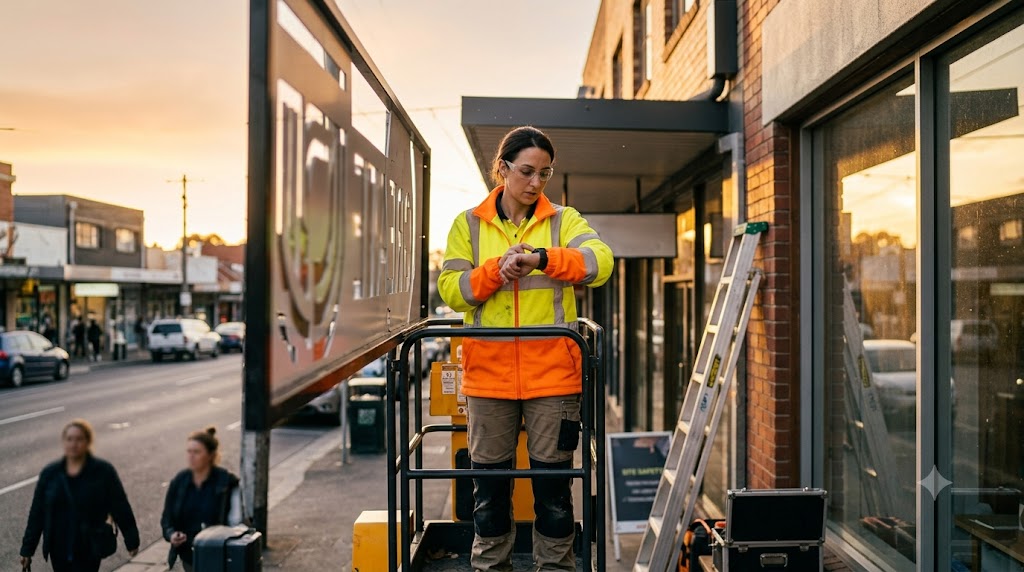
An install date is a promise made to a customer, often weeks before anyone touches a tool. Between that promise and the crew arriving on site sits production, materials, and a dozen chances for the date to quietly slip. The installer is usually the last to know — and the first the customer blames.
Sign OS keeps the install date honest by making it the same date everything else is scheduled around. There's no separate installer calendar drifting out of sync with the shop. There's one required date, and the whole job is built backward from it.
The date is set once, at the quote
When a quote is built, Sign OS captures the dates that matter as structured fields, not as a line in the notes: a manufacture completion date and the client required date — when the customer actually needs it delivered or installed. Those aren't decoration. They flow through to the job and become the anchor the scheduler works against.
Because the date lives on the job, it's the same date the installer sees, the same date production is measured against, and the same date the front office quotes from. Nobody is working from a screenshot of a calendar someone photographed last Tuesday.
The schedule is built backward from the deadline
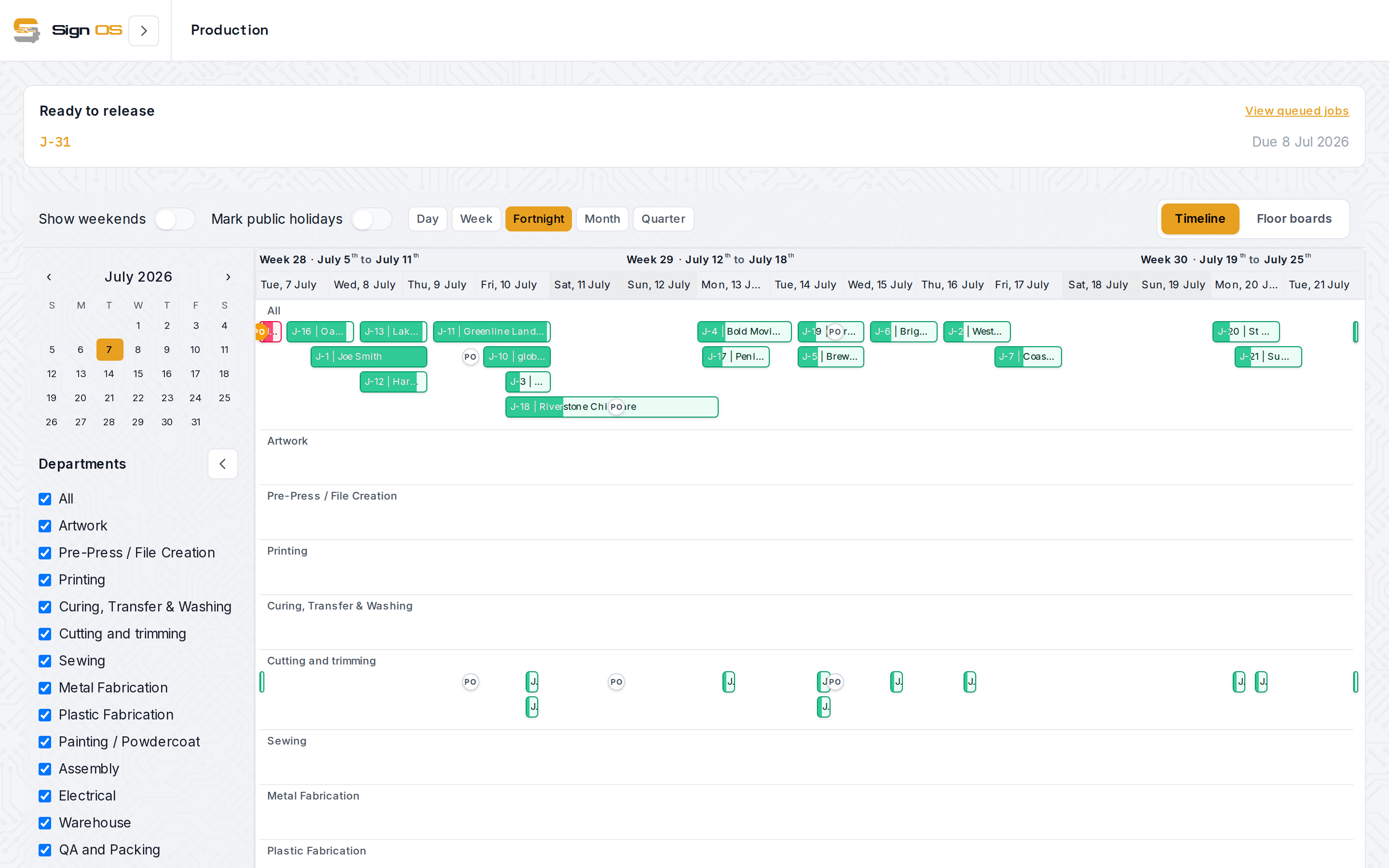
When a job is released to production, the just-in-time scheduling engine doesn't ask "when can we start?" — it starts from the due date and works backward. It sums the estimated minutes of every production step, adds each department's buffer, and lays the work into your real working calendar: your configured days and hours, minus weekends and Australian public holidays.
The result is a schedule that already accounts for the install deadline. If the work genuinely doesn't fit before the required date, you see it immediately — not the week of the install.
At-risk and critical, before the customer notices
Every job on the Production Timeline carries a continuously calculated health status:
- On track — there's enough time for the remaining work plus buffers.
- At risk — time is getting tight against the work still to do.
- Critical — there's less time left than the raw labour needs; this date will slip unless something changes.
Those flags turn amber and red on the timeline while there's still room to act — pull a job forward, add a shift, call the customer early. Above the board, capacity warnings show which departments are overloaded for the period, so you can see the bottleneck that's about to threaten three install dates at once, with a utilisation percentage next to it.
Purchase orders raised against a job appear as markers on its timeline bar at their required-by dates, with overdue ones standing out — because the most common reason an install date slips isn't the crew, it's material that didn't land in time.
The installer sees the same due date
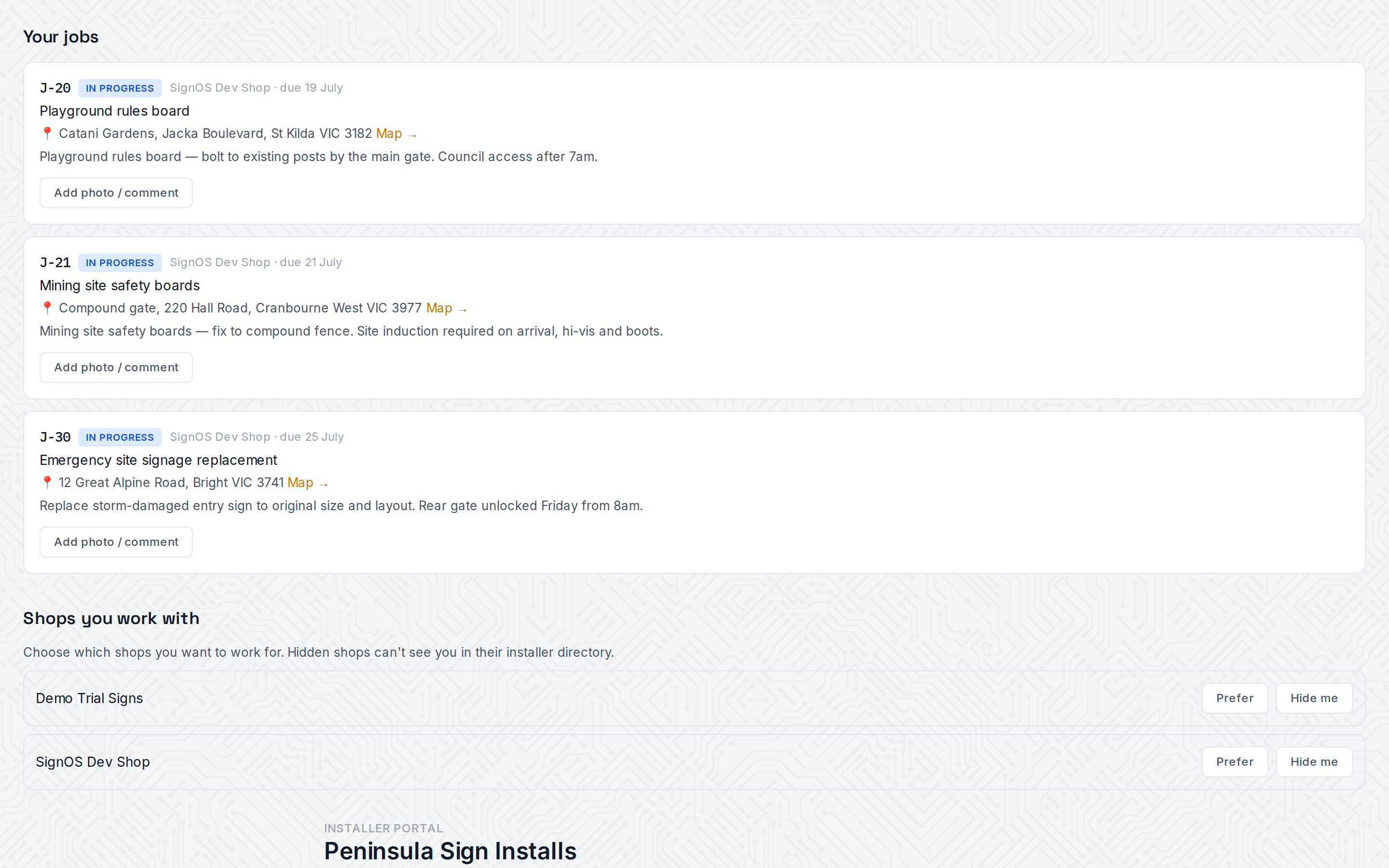
Installers work through their own portal, where every assigned job shows its due date alongside the site address, the project, and the shop's installer notes — pulled straight from the job, across every shop that's assigned them work. There's no separate spreadsheet to reconcile and no version of the schedule that only the office can see. The date the shop is racing toward is the date on the installer's screen.
Honest about the edges
Sign OS keeps the schedule truthful and shared; it doesn't yet push the installer a reminder or an alert when a date moves — the portal reflects the current job list whenever they open it, rather than notifying them. Deeper reminders are on the roadmap, and we keep an honest status board on our own homepage rather than promising what isn't shipped. What's real today is the thing that actually prevents blown deadlines: one date, set at the quote, scheduled backward with real working time, flagged early when it's at risk, and visible to everyone who has to hit it.
Sign OS is built and operated in Australia — AUD plans, a working calendar that knows local public holidays, and a free 7-day trial with no card required.